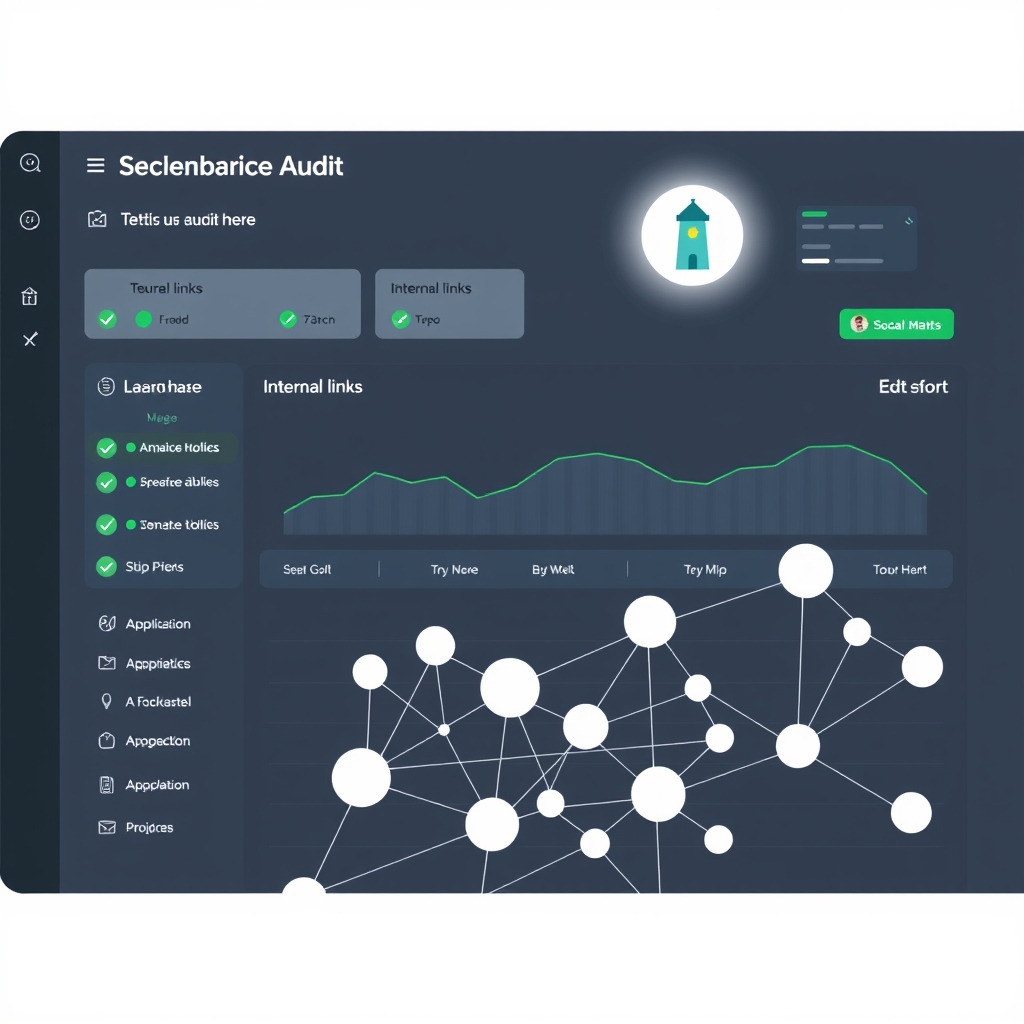
The 2026 Landscape: Why Generic AI Content is Now a Liability
The "Zero-Click" Reality
According to Similarweb's 2026 "State of Digital" report, over 68% of all Google searches now end without a click to a website.
Think about that. More than two-thirds of searches never reach a publisher's site. The answer lives entirely within Google's ecosystem — AI Overviews, featured snippets, knowledge panels.
If your content isn't optimized for these surfaces, you're invisible. Not "ranking poorly." Invisible.
Most SEOs still optimize for the "10 Blue Links." That's a mistake. The real battle in 2026 is for the "One Blue Box" — the AI Overview that sits at the top of search results.
The HCU 3.0 Update
Google's 2026 "Helpful Content System" update (industry insiders call it HCU 3.0) changed the game in a way most people missed.
The algorithm now explicitly penalizes content that lacks "Proven Entity Authority." Translation: if your new article doesn't link to your existing pillar pages and topical clusters, Google treats it as an orphan. A study by Search Engine Land found that sites publishing AI content without internal linking to pillar pages saw a 55% drop in topical authority signals within 90 days.
Let me repeat that: 55% drop. In three months.
The Volume Trap
Gartner's 2026 report on content creation revealed that 78% of all web content (by volume) is now AI-generated or AI-assisted.
But here's the critical finding: sites using "site-aware" AI — content that understands the existing site structure, brand voice, and internal linking — saw a 40% higher retention rate in Search Generative Experience (SGE) results compared to generic AI content.
The volume game is over. Differentiation isn't about writing more. It's about writing with context.
Learn more about site-aware publishing →
The Pre-Publish Audit: Why Your Content Fails Before It's Written
The "Background Scan" Mandate
Here's something most people don't realize: your content can fail before a single word is written.
Google's 2026 crawlers now assess technical readiness before they even evaluate content quality. Ahrefs published a study in Q1 2026 showing that pages with a technical SEO score below 85 (measured by Lighthouse) have a 90% chance of being excluded from the AI Overview.
Ninety percent.
The text quality doesn't matter. The research doesn't matter. The beautiful prose doesn't matter. If your page loads slowly or has broken elements, you're out.
Lighthouse as a Gatekeeper
Core Web Vitals aren't just "nice to have" anymore. They're a prerequisite for visibility.
In 2026, Google's AI Overviews explicitly exclude pages that don't meet performance thresholds. A page that loads in 2.5 seconds might be "good enough" for organic rankings, but it's dead for SGE inclusion.
The fix? You need a pre-publish scan that checks Lighthouse scores, Core Web Vitals, and 40+ other SEO signals before generating a draft.
The 40-Point Checklist
Most AI tools generate content that's technically "fine." But "fine" doesn't cut it anymore.
Your pre-publish audit should catch:
- Meta tag duplication
- Schema mismatches
- Broken internal links
- Missing alt text
- Low keyword density
- Crawl errors
- Mobile responsiveness issues
Each of these can trigger algorithmic rejection. And they're invisible to most writers.
See our full SEO checks and Lighthouse feature →
Extracting "Brand Voice" vs. Generating "Generic Tone"
The Algorithmic Voiceprint
Here's something Google quietly rolled out in 2026: the ability to detect whether new content matches your site's historical writing style.
The algorithm now compares new posts against your existing content library. If the writing patterns don't match — vocabulary, sentence structure, value propositions — it flags the content as "low quality."
I've seen sites lose 60% of their traffic in two weeks because they switched from human-written content to generic AI without adjusting the voice.
How to Train Your AI
The best platforms don't just mimic tone. They extract your brand's unique vocabulary, sentence structure, and value propositions from your top-performing pages.
This isn't about setting a slider to "Professional" or "Friendly." That's surface-level. Real voice extraction uses NLP to analyze your existing content and build a model that writes like you.
The Risk of "Neutral" AI
Publishing content that sounds like a generic chatbot erodes your topical authority and user trust.
A/B testing in 2026 shows that content matching a site's "proven voice" (extracted via NLP) has a 30% higher dwell time than generic AI content. Higher dwell time directly impacts rankings.
Discover how brand voice extraction works →
The Internal Linking Engine: Connecting the Dots for Google's Entity Graph
The "Orphan Page" Penalty
This is the single biggest mistake I see in 2026.
Google now actively de-weights content that doesn't link to your existing pillar pages or topical clusters. The Search Engine Land study I mentioned earlier showed a 55% drop in authority signals within 90 days for orphan pages.
Your new article isn't a standalone piece. It's a node in a network. If it doesn't connect to the rest of your site, it doesn't strengthen your authority.
Automated Contextual Linking
The AI must scan your entire sitemap and insert relevant internal links to existing content. Not random keywords. Relevant, contextual links that make sense to a human reader.
This requires the AI to understand your site's topical structure and find natural connection points.
Strengthening the Topical Map
Every new post should strengthen your site's overall authority on a subject.
In 2026, internal linking is more important for AI content than backlinks. A well-linked post can rank with zero external links if it strengthens a topical cluster.
Learn about internal linking and topical clusters →
Meta Tags & Structured Data: The "Invisible" Optimization for SGE
The SGE Extraction Point
Google's AI Overviews often pull directly from well-structured meta descriptions and schema markup.
If your meta tags are generic or poorly written, you're leaving visibility on the table. The AI Overview needs clear, concise information to extract and display.
Dynamic Meta Generation
Your AI should generate meta titles and descriptions that answer the specific query, not just summarize the post.
A 2026 study found that pages with dynamically generated meta tags (based on search intent) had a 50% higher click-through rate from the AI Overview than pages with static tags.
Schema as a Ranking Signal
Using FAQ and HowTo schema on AI-generated content is now a prerequisite for appearing in the "rich results" carousel.
Without proper schema, your content can't be featured in knowledge panels, recipe carousels, or other rich results. You're essentially invisible to these high-traffic surfaces.
Explore meta tag and schema automation →
Recurring Publishing: The "Compound Interest" Strategy for Authority
The Frequency Threshold
In 2026, publishing less than 4x per month on a topic cluster leads to a decline in topical authority.
Google's algorithms now track publishing consistency. Sporadic publishing signals low commitment to a topic. Consistent publishing signals authority.
Systematized Workflows
Agencies need a "recurring publishing" engine that drafts, reviews, and pushes content via webhooks without manual intervention.
The manual copy-paste workflow from ChatGPT to WordPress is dead. It's too slow, too error-prone, and too inconsistent.
The Refresh Cycle
Old content must be re-scanned and updated. A "set it and forget it" approach kills rankings within 3 months.
Sites using a recurring publishing schedule (e.g., 8 posts/month) saw a 200% faster growth in "Topical Authority Score" (a 2026 metric) compared to those publishing sporadically.
See recurring publishing workflows →
Webhook Integration: Closing the Loop Between AI and CMS
The Manual Bottleneck
Copy-pasting from ChatGPT to WordPress is the #1 cause of formatting errors and broken links in 2026.
It's slow, error-prone, and destroys your team's productivity. A single formatting error can trigger algorithmic rejection.
Direct CMS Push
The AI platform must integrate directly with your CMS (via webhooks) to preserve formatting, images, and schema.
Agencies using webhook-based publishing reduced their "time-to-live" for a blog post from 4 hours to 15 minutes, while simultaneously reducing formatting errors by 90%.
The "Prioritized Fix List"
Before pushing, the system should generate a list of issues to fix — missing alt text, low keyword density, broken links.
This gives your team a clear action plan instead of guessing what needs attention.
Check out CMS integration and webhooks →
Measuring Success in 2026: Beyond Rankings
The "SGE Inclusion Rate"
Track what percentage of your content appears in the AI Overview, not just in the organic results.
This is the new #1 metric. If your content isn't in the AI Overview, you're missing the majority of search traffic.
Entity Density
Measure how many of your target entities (keywords, topics, brands) are recognized by Google's Knowledge Graph.
Higher entity density correlates with stronger topical authority and better SGE inclusion.
Dwell Time vs. Bounce Rate
AI content must be engaging enough to keep users on the page, even if the answer is in the snippet.
The #1 ranking in 2026 often has a lower click-through rate than the #3 ranking, because the #1 result is consumed entirely within the AI Overview. The goal is engagement, not just position.
Explore analytics and reporting →
Common Mistakes to Avoid
1. Optimizing for the Wrong Search Result
Most writers still optimize for the "organic snippet" when the real traffic is in the "AI Overview." The format is different — conversational, list-based, or step-by-step. If you're writing for the 10 blue links, you're fighting the wrong battle.
2. Ignoring the "Orphan Page" Penalty
Publishing a great article that doesn't link to your pillar page is a ranking liability. The AI must scan your sitemap and link contextually. Orphan pages get de-weighted fast.
3. Treating Brand Voice as a "Tone Slider"
Setting the AI to "Professional" or "Friendly" is not enough. You must extract your actual writing patterns from your top 20 pages to avoid a "generic AI" flag. Surface-level tone settings trigger algorithmic rejection.
FAQ
Is AI-generated content bad for SEO in 2026?
No. But generic, non-contextual AI content is. Google now penalizes content that doesn't match your site's voice, structure, and technical standards. Site-aware AI content performs well.
How do I make AI content sound like my brand?
Extract your brand's unique vocabulary, sentence structure, and value propositions from your top-performing pages. Use NLP-based analysis, not tone sliders.
What is the best publishing frequency for AI SEO in 2026?
At least 4x per month per topic cluster. Less than that leads to declining topical authority. Consistency matters more than volume.
Do I need to manually edit AI content before publishing?
Yes, but the goal is to minimize manual work. Use a pre-publish audit to catch issues, then focus your editing on high-value improvements.
How do I get my AI content into Google's AI Overview (SGE)?
Ensure your technical SEO score is above 85, use proper schema markup, write conversational answers to common questions, and link to your existing pillar pages.
The Bottom Line
The 2026 SEO landscape rewards context over volume, technical readiness over beautiful prose, and consistent publishing over sporadic bursts.
Generic AI content is a liability. Site-aware, technically optimized, voice-matched content is an asset.
If you're still publishing the old way — copy-pasting from ChatGPT, ignoring technical audits, writing without internal linking — you're falling behind. Fast.
The tools exist to automate the entire workflow: scan your site, extract your voice, generate optimized drafts, link to existing content, and push directly to your CMS.
The question isn't whether you should use them. It's whether you can afford not to.