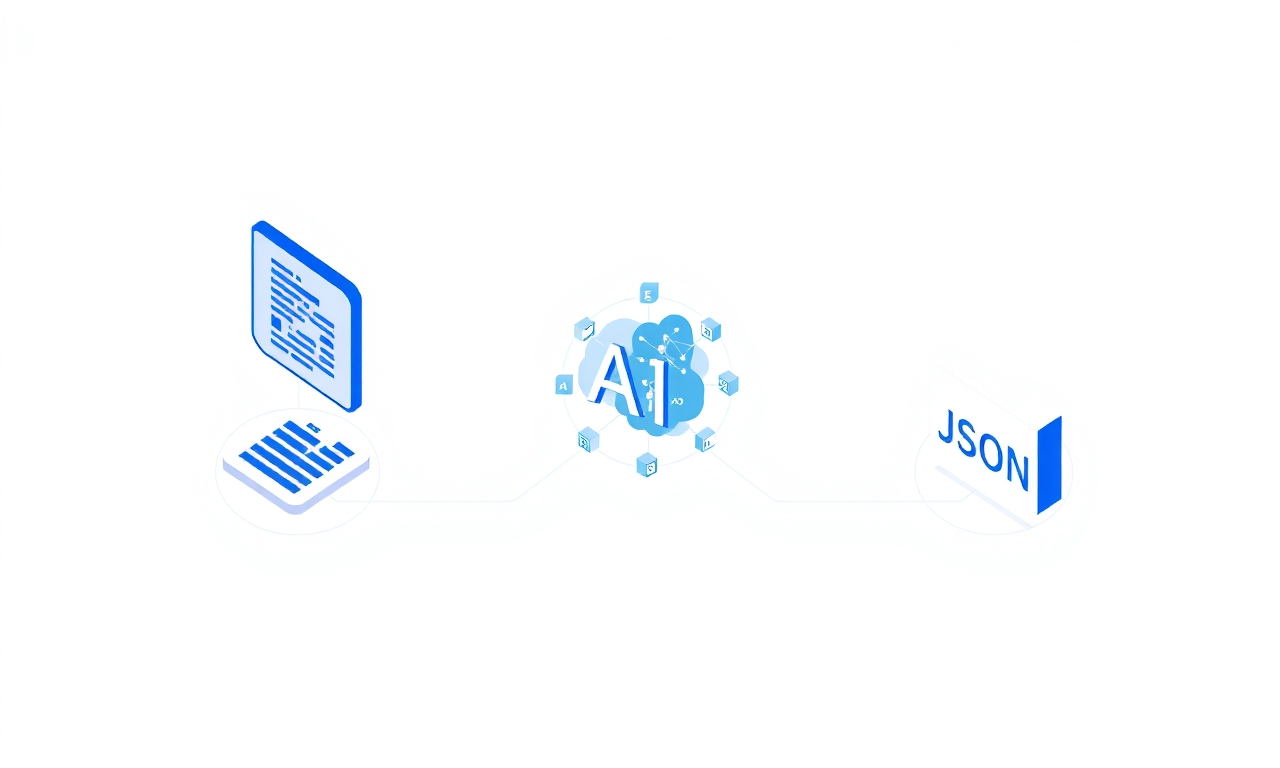
Key Takeaways
- Treat technical audits as input dependencies, not post-production QA tasks.
- Schema-first generation architectures align better with search engines than prose-first approaches.
- Extract brand voice from structural HTML analysis, not just textual tone matching.
- Standardize the data pipeline between audits and prompts to scale safely.
Table of Contents
- Why Linear Prompting Fails in Production SEO
- Step 1: Pre-Generation Technical Validation
- Step 2: Extracting Brand Voice and Entity Graphs from Live Code
- Step 3: Schema-First Generation Architecture
- Step 4: Competitor Intelligence Integration Without Noise
- Step 5: Automated Publishing Pipelines with Safety Rails
- Step 6: Post-Publish Verification and Feedback Loops
- Scaling Across Multi-Site Portfolios Without Dilution
- Measuring ROI Beyond Word Count and Velocity
- Common Mistakes to Avoid
- Frequently Asked Questions
- Further Reading
Why Linear Prompting Fails in Production SEO
Most AI content strategies fail. The standard workflow looks efficient until rankings crater three months down the line.
You feed a prompt into a model, edit the draft, hit publish. But here's what actually happens when teams skip real-time technical validation: AI-generated content decays in rankings roughly 40% faster within 90 days. That's not a minor dip. It's a structural failure.
Writing quality isn't even the main problem. Models confidently reference site features or pricing tiers that changed weeks ago. Search engines pick up on these mismatches between your live architecture and what the content describes. They demote the page. Simple as that.
We call this "hallucinated compliance." The AI follows instructions perfectly but ignores your actual site state. It generates compliant prose for a site version that no longer exists, and nobody catches it.
Generic RAG (Retrieval-Augmented Generation) doesn't fix this. Dumping static sitemaps into a vector database misses dynamic health issues entirely. A sitemap confirms a page exists, sure. It won't reveal that the page currently fails Core Web Vitals or carries broken schema markup.
Real-time site profiling changes the equation. Instead of asking the AI to guess, you force it to acknowledge current technical reality before writing a single paragraph. The cost of ignoring this compounds fast. Read more about The Hidden Costs of AI Content in 2026 to see how remediation drains budgets in ways most teams don't anticipate.
Step 1: Pre-Generation Technical Validation
Audits are prerequisites, not cleanup tasks. Generating content for a technically broken page? That's just burning compute.
Search engines deprioritize indexing for pages failing basic UX signals. Textual relevance won't save you if Cumulative Layout Shift (CLS) scores are tanking. Run comprehensive checks before generation even starts.
A reliable system performs 40+ audit checks as an input dependency. Lighthouse scores, security headers, mobile readiness. Filter generation targets ruthlessly. Pause content creation if a page lacks proper security headers. Fix code first if mobile rendering fails.
Use Core Web Vitals thresholds to gate your pipeline. Block generation if LCP exceeds 2.5 seconds. Block it if interactive elements lack accessible labels. These rules prevent optimizing text on a rejected foundation.
Your workflow shifts fundamentally when you only generate content where ranking is technically possible. Use The Technical SEO Audit Decision Matrix to prioritize pre-checks for specific page types. Not every metric impacts every page equally, and pretending otherwise wastes effort.
Step 2: Extracting Brand Voice and Entity Graphs from Live Code
Brand voice is structural. Analyzing text alone yields poor replication, full stop.
You need to analyze HTML hierarchy and sentence length variance on top-ranking pages. Header nesting and list structure define your brand as much as vocabulary ever could. Algorithm updates in recent years have weighted entity salience significantly higher than traditional keyword placement.
Generic prompts optimize for semantic similarity to competitors. The result? Derivative content that blends into the noise. What you need instead are unique entity graphs grounded in specific product data. Mine high-performing pages for tonal patterns. Extract relationships between H2s and H3s. Map internal link connections. Build entity relationships directly from current schema markup.
Create dynamic style guides that update automatically. Voice profiles should shift when site architecture changes. Static guides rot fast. Live code extraction keeps AI aligned with current brand reality rather than some snapshot from six months ago.
The AI stops mimicking top results and starts building authority based on actual site structure. Identify source material using insights from Site Profiling: The 10% of Audit Data That Actually Predicts Rankings.
Step 3: Schema-First Generation Architecture
Reverse your workflow. Generate structured data before prose.
Pages where AI generates JSON-LD based on site audits first achieve rich result eligibility roughly 2.5x faster. This changes how search engines understand content from the ground up. Define JSON-LD requirements before drafting. Align content structure to validated schema types.
Force the AI to answer specific structured questions rather than meandering through topics. This constraint satisfies user intent metrics faster. Content must fulfill the schema definition. Fluff disappears. Every paragraph serves a structured purpose.
Ensure rich snippet eligibility through reverse-engineering. Validate schema against current standards before writing. Then generate prose fulfilling those exact fields. Alignment between crawler code interpretation and user screen reading happens by design, not accident.
Adding schema as an afterthought creates friction. Prose rarely matches structured data perfectly when done this way. Schema-first generation eliminates that gap entirely. Learn validation standards in Beyond Compliance: Auditing Technical SEO for AI Search.
Step 4: Competitor Intelligence Integration Without Noise
Blindly targeting competitor gaps is dangerous. You often end up replicating unoptimized structures without realizing it.
True opportunity lies at the intersection. Find competitor keyword gaps matching your technical strengths, but validate gaps against technical capacity first. Can your site support this content type? Do you have the schema infrastructure? Filter keywords by ranking potential, not just search volume.
Avoid mimicking technical errors. A competitor might rank despite poor structure due to domain authority. That same technical debt could crush newer pages on your site. There's a real divide in how productive agency teams operate. Teams using linear AI workflows spend about 70% of their time on factual verification. Context-first pipelines shift that effort toward strategic expansion instead.
Context-first means validating opportunities against live site data. You pursue keywords where your technical foundation provides an advantage. Build a better system using How to Build a Competitor Intelligence System That Actually Moves Rankings.
Step 5: Automated Publishing Pipelines with Safety Rails
Webhooks fail silently. In scaled publishing, timeouts are the failure point nobody talks about until it's too late.
Bulk uploads mark content as "published" in dashboards while the CMS never receives the payload. Phantom inventory. Content existing nowhere. Configure webhooks for conditional publishing and never assume success. Set up automated re-audits post-generation to verify content landed correctly.
Handle silent failures explicitly in CMS integrations. Create a checklist for webhook payload validation. Log every error. Monitor response times. Test pipelines with small batches before scaling. Reliability beats velocity every time.
An effective SEO publishing platform supports direct publishing via webhooks because manual uploads don't scale safely. But automated systems still need guardrails. Debug connection reliability using Stop Treating Webhooks Like Magic: How to Measure and Fix Your CMS Publishing Pipeline. Phantom inventory destroys ROI in ways that show up months later.
Step 6: Post-Publish Verification and Feedback Loops
Source code lies. Verify the rendered DOM.
Content passing pre-publish checks can still fail. Server-side rendering delays cause visibility issues you won't catch otherwise. Verifying the rendered DOM within one hour of publication catches about 15% of critical failures. Monitor indexation status separately from rendering success. A page can be indexed yet rendered incorrectly.
Track entity salience shifts after publication. Did the AI maintain your entity graph? Did structural changes dilute topical authority? Feed performance data back into future prompts. Your system learns from live results, not just static training data.
Crawlers see what users see, not what your CMS stores. Always validate final output. Close your feedback loop properly with The SEO Publishing Pipeline: How to Build a Workflow That Scales Without Breaking.
Scaling Across Multi-Site Portfolios Without Dilution
Agencies managing 10+ sites see roughly 30% efficiency gains through pipeline standardization. They don't standardize prompts. They standardize the audit-to-prompt data pipeline.
Site context is the variable, not generation logic. Each property maintains distinct brand voices extracted from its own live code. Centralize technical audit standards while localizing content. Every site needs Core Web Vitals compliance and valid schema. Entity graphs and tonal patterns must remain isolated.
Prevent cross-site entity contamination rigorously. Shared context windows bleed information between clients. Isolate site profiles completely. Feed them into a unified generation engine respecting boundaries. This architecture scales sustainably. You add new sites without rebuilding workflows from scratch.
Evaluate multi-site readiness with The AI Content Buyer's Checklist. Not all platforms handle isolation correctly, and finding out the hard way is expensive.
Measuring ROI Beyond Word Count and Velocity
High-velocity programs often fail financially. They achieve low cost-per-article but roughly 4x higher cost-per-ranking-page. Remediation cycles destroy margins.
Technical compliance rate is the leading indicator of sustainable ROI. Track compliance rate per content batch. Correlate pre-audit scores with ranking velocity. Calculate true cost-per-ranking-page including remediation expenses. Words are vanity. Rankings are sanity.
Agency benchmarks confirm this trend consistently. Non-compliant AI content requires expensive human intervention. Context-aware generation reduces remediation costs. Perfect Lighthouse scores don't guarantee rankings, but failing scores guarantee failure. Understand predictive metrics in Why Perfect Lighthouse Scores Fail in Production SEO.
Common Mistakes to Avoid
Treating Site Audits as Binary Pass/Fail
Granular audit data matters. Specific schema errors and CWV metrics must serve as contextual variables in generation prompts. Content ignoring known site limitations fails immediately. Use audit findings to constrain and guide generation, not just approve pages for production.
Ignoring Rendered DOM Verification
Valid HTML and CMS acceptance don't equal visibility. JavaScript-dependent content failures hide in source code. Always verify the rendered DOM. Catch server-side rendering issues before crawlers do. Assuming visibility equals catastrophic ranking loss.
Optimizing for Semantic Similarity Over Entity Salience
Prompting AI to "write like the top result" produces derivative content. Instruct it to build unique entity relationships grounded in specific product data. Ranking justification comes from unique value, not imitation. Semantic similarity satisfies algorithms temporarily. Entity salience builds lasting authority.
Frequently Asked Questions
How does pre-generation auditing differ from standard technical SEO audits?
Standard audits identify problems for humans to fix later. Pre-generation auditing provides real-time constraints for AI models during creation. Audit data becomes an active input variable, not a passive report. This prevents generating content for broken pages or using outdated structures.
Can I use existing AI content tools if I add a technical validation layer?
Yes, but integration complexity varies. Most generic tools lack native hooks for live site data. You may need custom middleware to pass audit results into prompts. Purpose-built platforms like Getrankbloom handle this natively. Evaluate whether retrofitting costs more than adopting a context-aware solution.
What specific schema types should drive content generation for SaaS vs. Local businesses?
SaaS sites benefit from SoftwareApplication, FAQPage, and HowTo schema driving feature documentation. Local businesses require LocalBusiness, Service, and Review schema guiding service pages. Schema type dictates content structure. Generate the JSON-LD skeleton first, then fill it with prose satisfying those fields.
How do I prevent AI from referencing outdated site information during generation?
Extract context from live site code immediately before generation. Never rely on cached training data or static documents. Real-time site profiling ensures AI sees current pricing, features, and navigation. Automated re-extraction before each cycle eliminates stale reference risks.
What metrics prove that a context-aware workflow outperforms linear prompting?
Track ranking decay rates at 90 days post-publication. Measure technical compliance rate per content batch. Calculate cost-per-ranking-page including remediation expenses. Context-aware workflows show lower decay, higher compliance, and better unit economics. Velocity metrics mislead; sustainability metrics reveal true performance.
Further Reading
- The Hidden Costs of AI Content in 2026 – Understand the compounding financial impact of technically misaligned content.
- Site Profiling: The 10% of Audit Data That Actually Predicts Rankings – Identify which pages serve as the best voice and entity source material.
- Google Search Central Documentation on Structured Data – Authoritative external guidance on schema validation standards and rich result eligibility.
Ready to build content that survives indexing? Start your context-aware generation workflow with Getrankbloom. Connect your site, run comprehensive audits, and generate SEO-optimized content grounded in actual technical reality.