Key Takeaways
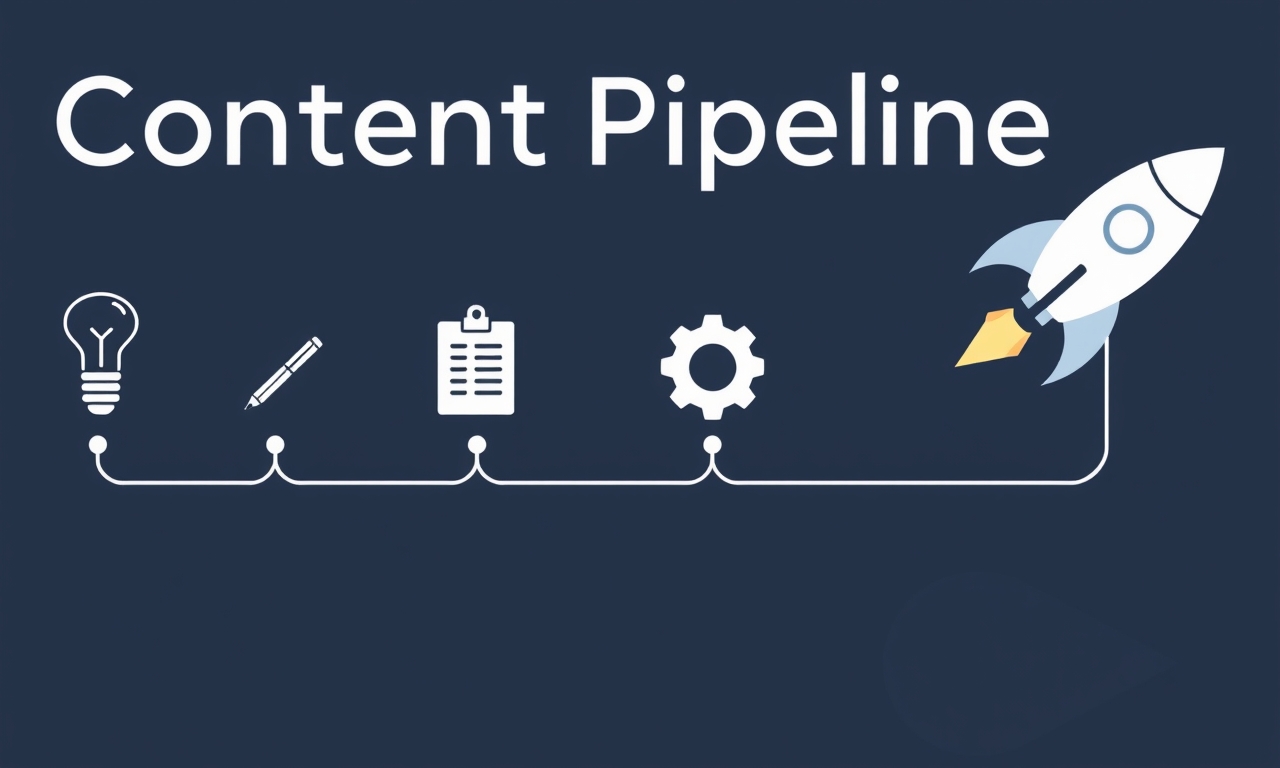
- A scalable SEO publishing workflow is a technical pipeline with five stages: sourcing, briefing, drafting, technical gating, and post-publish iteration. Each stage must have clear entry and exit criteria.
- The bottleneck is almost never writing speed; it's editorial decision-making and context-switching. Reduce decision points and batch work by client to cut time-to-publish by 50%.
- Pre-publish technical gates (40+ checks) are non-negotiable. A single broken internal link or missing schema can undo weeks of work. Automate the gate, but keep a human in the loop for strategic decisions.
- "Publish and forget" is the fastest path to a ghost draft. Build a post-publish loop that monitors rankings and automatically triggers content refreshes based on performance drops.
Table of Contents
- Why Your Current Workflow Hits a Wall at 10 Posts Per Month
- Stage 1: Sourcing & Validation — Kill the Idea Before It Wastes a Draft
- Stage 2: The Contextual Brief — Your Single Source of Truth
- Stage 3: The Drafting Loop — AI as Co-Pilot, Not Pilot
- Stage 4: The Technical Gate — 40 Checks Before You Click "Publish"
- Stage 5: The Deployment Pipeline — Webhooks, Staging, and the "Soft Launch"
- Stage 6: The Post-Publish Loop — Iteration, Not Abandonment
- Managing the Multi-Site Matrix — Workflows for Agencies
- Measuring What Matters — Beyond "Posts Published"
- Common Mistakes to Avoid
- Frequently Asked Questions
- Further Reading
Why Your Current Workflow Hits a Wall at 10 Posts Per Month
Here's the dirty secret most SEO teams won't admit: you can publish 10 posts a month with duct tape and coffee. But the moment you try to hit 20, 30, or 50, the whole system collapses.
Not because your writers are slow. Not because your editors are lazy. Because your workflow was designed for a volume you've already outgrown.
The linear vs. parallel workflow trap
Most teams serialize everything. Research happens first. Then writing. Then editing. Then publishing. Each step waits for the previous one to finish.
This creates a single point of failure. If your editor gets sick, nothing moves. If a client takes three days to approve a brief, the writer sits idle. The whole pipeline stalls because one cog stopped turning.
The fix is brutal but simple: parallelize. While one writer drafts, another should research. While one editor reviews, another should brief. You need multiple workstreams running simultaneously, not a single assembly line.
The hidden cost of context-switching
Let me be direct: every time your team switches between client sites, they lose 15-20 minutes of productive focus. That's not opinion. That's neuroscience. Your brain needs time to reload the context — the brand voice, the audience, the technical quirks of that specific CMS.
If your team manages five client sites and switches between them three times a day, you're losing 2-3 hours of productive work per person per week. That's 10-15 hours a month. For a team of three, that's a full work week gone.
The "one-size-fits-all" template fallacy
Most people don't realize that a workflow built for a local plumber will break for a SaaS enterprise. The plumber needs one blog post a week with local keywords and a Google Business Profile link. The SaaS company needs pillar pages, cluster content, technical documentation, and competitor gap analysis.
Your workflow must be parameterized by site profile. Not every client gets the same process. Not every post needs the same level of review.
Surprising insight: The bottleneck is rarely the writer's speed. It's the editorial decision queue. A 2025 study by ContentFly found that reducing editorial decision points by 30% cut time-to-publish by 50%. Every time someone asks "should this be a listicle or a guide?" you lose momentum. Standardize those decisions upfront.
Internal link: If you're making pre-publish errors that kill rankings, check out our guide on 7 SEO Platform Mistakes That Kill Your Rankings Before You Hit Publish.
Stage 1: Sourcing & Validation — Kill the Idea Before It Wastes a Draft
Most teams start with a keyword list. They find something with 1,000 searches a month and think "jackpot." Then they write 2,000 words, publish, and watch it get zero traffic.
Why? Because search volume without site authority is a mirage.
Moving from keyword volume to keyword intent + site authority
A keyword with 1,000 searches a month is useless if your site's topical authority can't compete. Google doesn't care about volume. It cares about whether your site is the best answer for that query.
You need to ask: does my site have existing content on this topic? Do I have internal links pointing to related pages? Does my domain have any track record of ranking for similar terms?
If the answer is no to all three, that keyword is a trap.
The "opportunity gap" analysis
Here's where competitor intelligence changes everything. Instead of chasing keywords your competitors already dominate, find the ones where they're weak.
Look for pages where your competitor ranks on page 1 but has thin content, poor technical SEO, or outdated information. Those are your targets. You don't need to outrank a 5,000-word pillar page from a domain authority 80 site. You need to find the soft spots.
A scoring rubric for ideas
Stop relying on gut feel. Build a scoring system. Rate each idea on:
- Search volume (weight: 20%)
- Conversion potential (weight: 30%)
- Production effort (weight: 20%)
- Internal link potential (weight: 30%)
Only ideas above a threshold enter the pipeline. This forces discipline. It kills the "this seems interesting" trap that wastes weeks of production time.
Surprising insight: Most teams over-value search volume and under-value existing internal link equity. A page that can be linked from 3 high-authority existing posts will often outrank a "better" piece of content that is an orphan. Internal links are the hidden superpower most teams ignore.
External stat: Ahrefs data from 2025 shows that over 25% of all pages indexed in Google have zero organic traffic after 12 months. Those are ghost drafts — content published without a strategic update or promotion plan.
Stage 2: The Contextual Brief — Your Single Source of Truth
If your brief is just a keyword and a word count, you're setting your writer up to fail.
Why a brief is more than a keyword list
A proper brief must include:
- Target audience persona (who are we talking to?)
- Brand voice examples (show, don't tell)
- Competitor angle analysis (what are they doing, and how do we do it better?)
- Specific technical requirements (schema type, image alt text strategy, internal link targets)
Without these, your writer is guessing. And guessing leads to rewrites.
Automating the brief generation using site audit data
This is where a platform like RankBloom changes the game. Instead of manually checking what schema your competitor uses, the audit data tells you. Instead of guessing which internal links to include, the site profile shows you existing high-authority pages.
The brief becomes a living document, not a static checklist.
The "brief sign-off" rule
No writer starts a draft until the brief is approved by the editor or client. This prevents rework. It forces alignment before anyone types a single word.
Most people don't realize that 80% of rewrites happen because the brief was unclear. Fix the brief, and you fix the draft.
Surprising insight: A 2025 study by WriterAccess found that content written from a structured, data-rich brief ranked an average of 23% higher in the first 90 days than content written from a keyword-only brief. The brief isn't overhead. It's a ranking factor.
Internal link: For more on how audit data feeds into better content, read Site Profiling: The 10% of Audit Data That Actually Predicts Rankings.
Stage 3: The Drafting Loop — AI as Co-Pilot, Not Pilot
Let me be direct: if you're using AI to write the final draft, you're doing it wrong.
Defining the "human-in-the-loop" handoff
AI generates the first draft based on the brief and site context. But a human must verify facts, brand voice, and strategic alignment. The AI handles the 80% solution — structure, research, first pass. The human applies the strategic 20% — unique insight, brand voice, fact-checking.
This isn't about speed. It's about quality control.
Using brand voice extraction
Generic AI sounds like generic AI. The "professional" tone setting produces content that reads like every other blog post on the internet.
The fix is brand voice extraction. Pull the tone from your top-performing existing pages. Feed that into the AI prompt. The output will sound like your brand, not a content mill.
The "one-pass" edit rule
Here's the rule that separates efficient teams from drowning ones: the editor's job is to approve or reject, not to rewrite.
If the draft requires significant rewriting, the brief or the AI prompt needs fixing. Don't let editors become de facto writers. That's a workflow failure, not a writing problem.
Surprising insight: The most common error in AI-generated drafts is not factual inaccuracy. It's tone drift. The content sounds like a generic blog, not the brand's specific voice. This is why site-context-aware AI outperforms general-purpose models for SEO. The context matters more than the model.
External stat: The Content Marketing Institute's 2025 survey revealed that 67% of B2B content teams cite "review and approval cycles" as their primary bottleneck. The average time from draft to publish is 8.2 days, with 3.1 of those days spent waiting on feedback. That's nearly 40% of your production time lost to waiting.
Stage 4: The Technical Gate — 40 Checks Before You Click "Publish"
Most teams publish first and fix later. That's a recipe for ghost drafts.
Automating the pre-publish checklist
Before any post goes live, it must pass a technical gate. This includes:
- Core Web Vitals scores
- Mobile readiness
- Schema validation
- Security headers
- Internal link density
- Image compression
- Readability scores
A platform like RankBloom runs 40+ checks automatically. No manual checklists. No "I'll fix it after publishing."
The "fail fast" principle
If the draft fails more than 3 of the 40 checks, it goes back to the drafting stage. Not to the editor. This prevents wasted editorial time on content that has technical issues.
The gate is automated. The decision to fix or reject is human.
Why Lighthouse scores are a gate, not a goal
A 100 Lighthouse score doesn't guarantee rankings. But a failing score guarantees poor performance. Treat Lighthouse as a minimum threshold, not a target.
Surprising insight: The most common technical failure in pre-publish checks is missing or broken internal links. A 2025 study by Botify found that 40% of new blog posts have at least one broken internal link on publish day. That's almost half of all new content shipping with a fundamental error.
Internal link: For a deeper dive on why perfect Lighthouse scores don't guarantee rankings, see The Lighthouse Score Trap: Why a 100 Won't Rank You.
Stage 5: The Deployment Pipeline — Webhooks, Staging, and the "Soft Launch"
Publishing isn't the end. It's the beginning of the next phase.
The difference between "publishing" and "deploying"
A webhook that pushes to a staging environment first allows for a final human review on the live-looking page. This catches rendering issues, formatting errors, and missing elements that automated checks miss.
Don't skip staging. It's your last line of defense.
Setting up conditional webhooks
"Publish immediately if the post passes all 40 checks, else queue for human review." This automates the easy stuff and flags the hard stuff. Your team only touches content that needs attention.
The "soft launch" strategy
Publish at a low-traffic time — Saturday morning, for example. This gives you a buffer to catch any rendering or formatting errors before the Monday morning traffic spike.
Surprising insight: Most CMS webhooks are "fire and forget." They don't report back on success or failure. A 2025 survey by Contentful found that 30% of webhook-triggered publishes had a silent failure — the post was created but without featured images or meta descriptions. You won't know unless you check.
Internal link: For a deep dive on webhook failures, read The Hidden Cost of Instant Publishing: What Nobody Tells You About CMS Webhooks.
Stage 6: The Post-Publish Loop — Iteration, Not Abandonment
"Publish and forget" is the fastest path to a ghost draft.
Setting a 30-day, 60-day, and 90-day review cadence
Every published post gets reviewed at 30, 60, and 90 days. The goal is not to "set and forget," but to "publish and improve."
At 30 days: check rankings. At 60 days: update internal links. At 90 days: refresh statistics and add new insights.
Using search console data to identify "near-misses"
Posts ranking on page 2 are your best opportunities. They need a single update — a stronger intro, a better internal link, an updated statistic — to push to page 1.
Don't rewrite the whole post. Find the one change that moves the needle.
Automating the "content refresh" trigger
If a post drops more than 3 positions in 30 days, it automatically enters the refresh queue. No manual monitoring needed.
Surprising insight: A 2025 study by Zyxworks found that updating a post with a single, high-quality internal link from a newer, more authoritative page was more effective for ranking recovery than rewriting the entire post. One link beats 1,000 new words.
External stat: Remember the Ahrefs data on ghost drafts? 25% of pages get zero traffic. Most of those pages were abandoned after publishing. A post-publish loop prevents that.
Managing the Multi-Site Matrix — Workflows for Agencies
Agencies face a unique challenge: every client is different, but the workflow must be consistent.
The "site profile" as the workflow's root node
Each client site has its own audit data, brand voice, and competitor set. The workflow must branch from this root. Don't treat all clients the same.
Standardizing the "handoff" between team members
A shared editorial calendar with clear statuses — Idea, Briefing, Drafting, Editing, Technical Gate, Deployed, Live, Monitoring — keeps everyone aligned. No more "where is this post?" questions.
The "capacity planning" spreadsheet
How many posts per site per month can your team realistically produce without quality degradation? Be honest. Overpromising leads to burnout and ghost drafts.
Surprising insight: The biggest efficiency gain for agencies is not faster writing. It's reducing context-switch overhead. A 2025 study by RescueTime found that knowledge workers spend 23% of their day switching between tasks. For SEO content teams, this is the time lost switching between client brand voices. Batch work by client. Don't switch mid-day.
Internal link: For a step-by-step playbook on competitor intelligence that scales, read The Competitor Intelligence Workflow: A Step-by-Step Playbook for SEO Teams (That Actually Scales).
Measuring What Matters — Beyond "Posts Published"
"We published 50 posts this month!" means nothing if 40 of them are ghost drafts.
The vanity metrics trap
Stop counting posts. Start counting performance.
The three metrics that matter
- Time-to-Rank: Days from publish to page 1. If this number is increasing, your workflow is degrading.
- Content Efficiency: Traffic per dollar spent. If this number is decreasing, you're wasting resources.
- Pipeline Velocity: Average time from idea to live. If this number is increasing, your workflow has bottlenecks.
Building a dashboard that shows workflow health
Don't just track content performance. Track where the bottlenecks are. Which stage has the longest queue? Which stage has the highest failure rate?
Surprising insight: The most predictive metric for long-term content success is internal link velocity — how quickly a new post gets linked to from existing high-authority pages. A post that gets 3 internal links in its first week has a 60% higher chance of ranking in the top 5 within 60 days.
Internal link: For a prioritization playbook on technical SEO, read The Technical SEO Audit That Actually Moves the Needle: A Prioritization Playbook.
Common Mistakes to Avoid
1. Treating all client sites as identical workflows
A local service business needs a different cadence and content type than a SaaS company. The workflow must be parameterized by site profile. One size fits none.
2. Using AI to generate the final draft, not the first draft
The most successful teams use AI for the 80% solution — structure, research, first pass — and then have a human apply the strategic 20% — brand voice, unique insight, fact-checking. AI writes the skeleton. Humans add the muscle.
3. Ignoring the "silent failure" of webhooks
Assuming a post went live correctly without verifying leads to technical debt that kills rankings. Check for missing images, broken meta descriptions, and incorrect canonical tags. Every time.
Frequently Asked Questions
How many posts per month is "scalable" for a small SEO team?
For a team of 2-3 people, 15-20 posts per month is sustainable with the right workflow. Beyond that, you need automation and parallel workstreams. The limit isn't writing capacity — it's editorial review bandwidth.
Should I use a staging environment for every blog post before publishing?
Yes. Staging catches rendering issues, formatting errors, and missing elements that automated checks miss. It adds 10 minutes to your workflow but saves hours of post-publish fixes.
How do I handle brand voice consistency when using AI to write for multiple clients?
Extract brand voice from each client's top-performing existing pages. Feed that into the AI prompt. Don't use generic "professional" or "casual" settings. The voice must come from the client's actual content.
What's the best way to track the status of dozens of posts in the pipeline?
Use a shared editorial calendar with clear statuses: Idea, Briefing, Drafting, Editing, Technical Gate, Deployed, Live, Monitoring. Every post should have a single owner at each stage.
How often should I update old blog posts in my content library?
Set a 90-day review cadence for every post. Posts that drop more than 3 positions in 30 days enter the refresh queue automatically. Posts that maintain or improve rankings get a lighter touch — just update statistics and internal links.
Further Reading
- 7 SEO Platform Mistakes That Kill Your Rankings Before You Hit Publish — Pre-publish errors that destroy your hard work.
- The Lighthouse Score Trap: Why a 100 Won't Rank You — Why technical perfection isn't enough.
- Search Engine Land: The State of SEO Content in 2025 — Industry data on content saturation and topical authority.
Ready to build a publishing pipeline that actually scales?
Stop patching together spreadsheets, manual checklists, and generic AI tools. RankBloom connects to your site, runs 40+ technical checks, extracts your brand voice, and generates SEO-optimized content from real site context. It supports multi-site management, competitor intelligence, and direct publishing to your CMS via webhooks.